
Gela Mikava's Built Faces
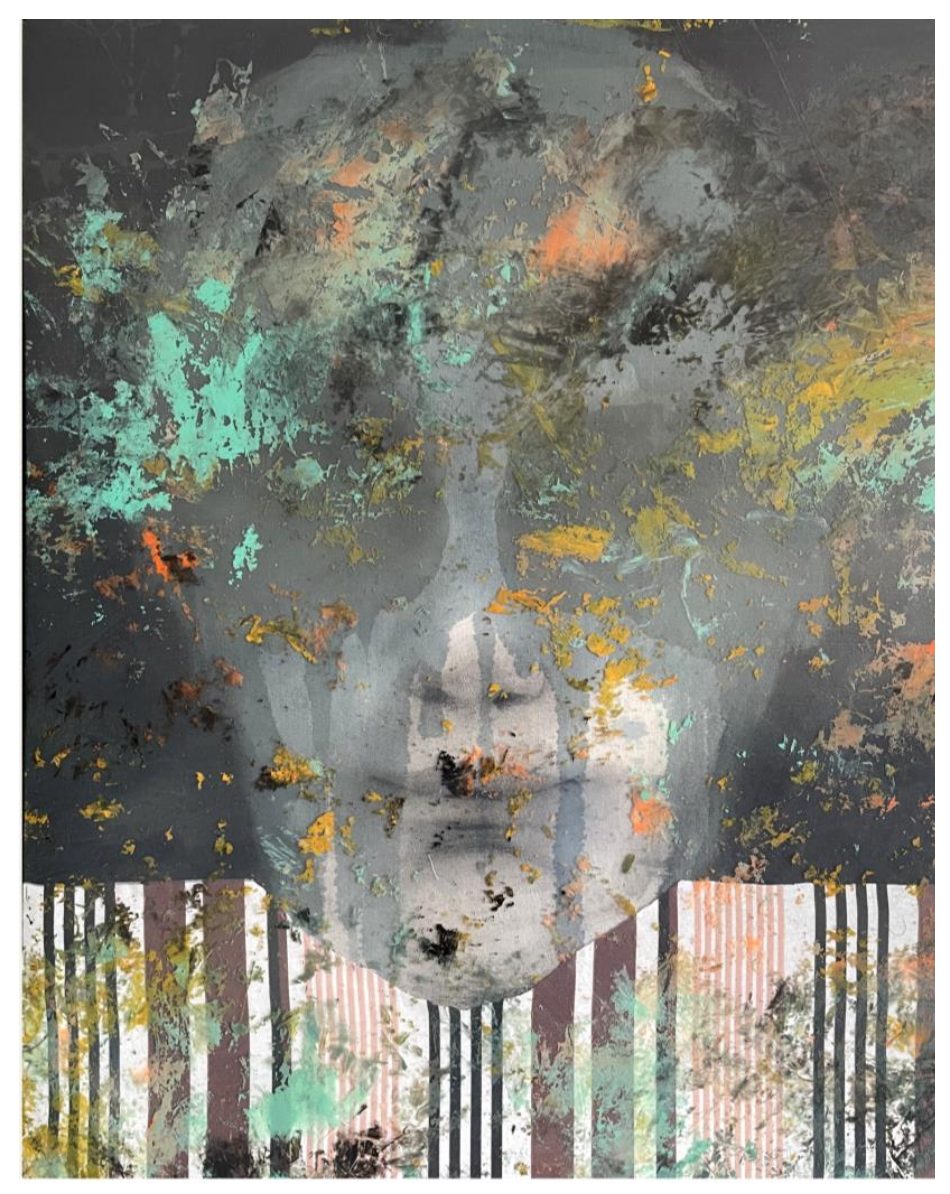
"An abstract portrait shows an upside-down human head and neck against a dark field with a striped band at the bottom." by Gela Mikava
Gela Mikava makes portraits that seem to assemble as you look, their faces crossed by bands, smears and flashes of colour.
The Tbilisi-based artist treats the human head as an image under construction. A face appears through a wash, then a dark scrape or a striped block at the neck changes the terms of the encounter. The figure stays with you, which is part of the pleasure. Mikava lets the portrait hold its place while the surface keeps moving.
Mikava's architectural background helps explain the portraits' firm sense of placement. Heads often sit centrally, held by lower bands and graphic divisions that give the work a built edge. The result is a sharp kind of looking: the face is recognisable, yet every mark around it asks you to take it in more slowly.
Layered Heads
In several works, the head seems to rise through the surface. Pale grey-blue skin comes forward from a dark field, while turquoise and yellow-orange marks cross the face. The portrait feels active, as though the person is arriving through noise rather than posing cleanly for us.
Mikava works in mixed media, and the layered handling is what gives the portraits their pace. A mouth may soften into the ground; an eye may be covered; a line may cut across the cheek and make the face pause. There is real pleasure in that delay. You find the person, lose part of them, then find them again with more attention.
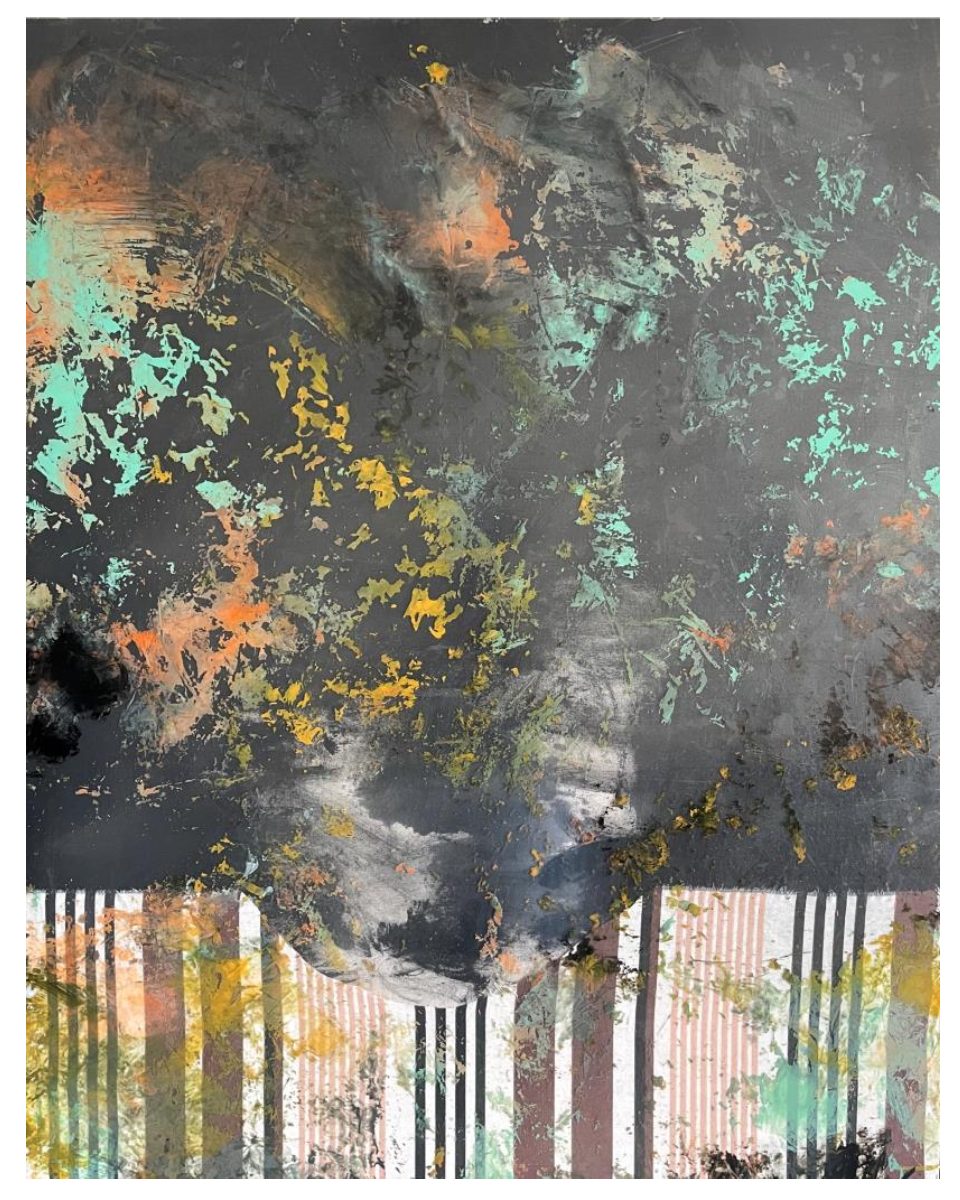
"An abstract portrait shows a mostly obscured upside-down human head near the lower half of a dark painted field." by Gela Mikava
The inverted heads sharpen this feeling without turning the works into puzzles. Even upside down, the face remains human. Mikava lets recognition survive the turn, and that small act gives the portraits their liveliness: they refuse to settle into one fixed reading.
Bands at the Neck
The striped lower bands are among the most distinctive parts of these portraits. They cut across necks and shoulders, acting like a base beneath the head. Their repeated verticals bring order to the surrounding marks, while stains and washes keep that order feeling handled, touched and altered.
Here the artist's interest in structure becomes visible without needing a biographical explanation. The head, the block below it and the moving field around it all press against one another. It feels carefully placed, yet never sealed off. The face has room to breathe inside the structure.
In the pink-ground portrait, black and green marks cover the eyes while small red strokes sit near the mouth. Expression is still there, gathered around the features we search first, then partly withheld. Mikava gives the portrait a human pull through that brief obstruction; looking becomes a slow act of recognition.
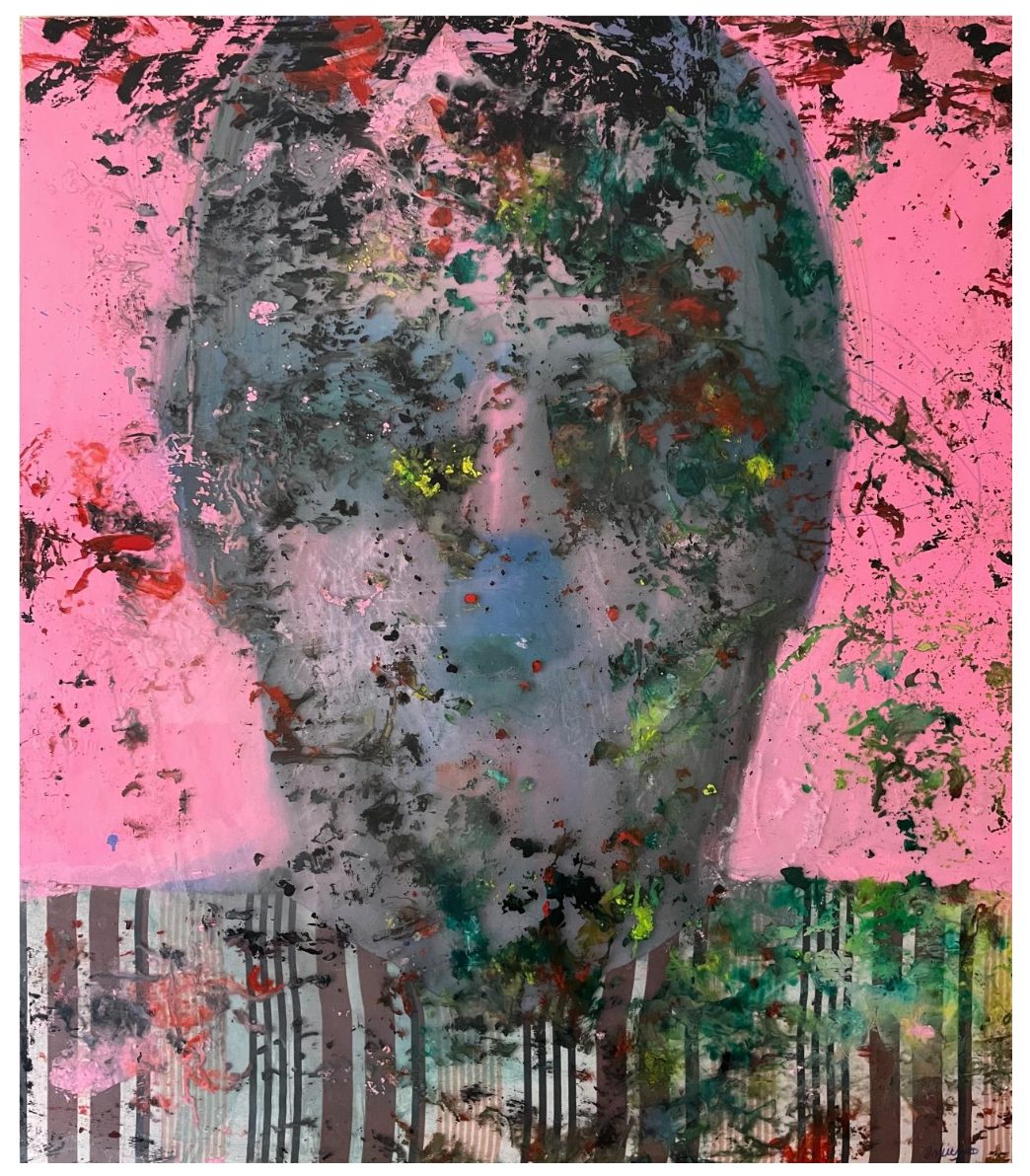
"An abstract frontal portrait shows a human head centered against a bright pink background." by Gela Mikava
Colour and Scrape
Mikava says the work deals with existential and political subjects, and the paintings carry those subjects through the handling of the face. They do not need direct explanation. The marks do the work: covering, warming, scraping and opening the image until the head feels exposed to the surface that makes it.
Colour carries much of this charge. In a pale-ground portrait, the upper face is held in a broad grey shadow while the lower face warms into orange. The shift changes the mood within one head, moving from cool distance to something closer and more bodily. The eyes are hidden, yet the face keeps pressing forward.
"Each piece is intended to plant a seed of thought that grows into a deeper understanding over time," Mikava says. It fits the way these works ask to be seen. At first, colour and stripes catch the attention; then the face begins to resolve through them, and the marks that seemed to interrupt it become part of how it thinks.
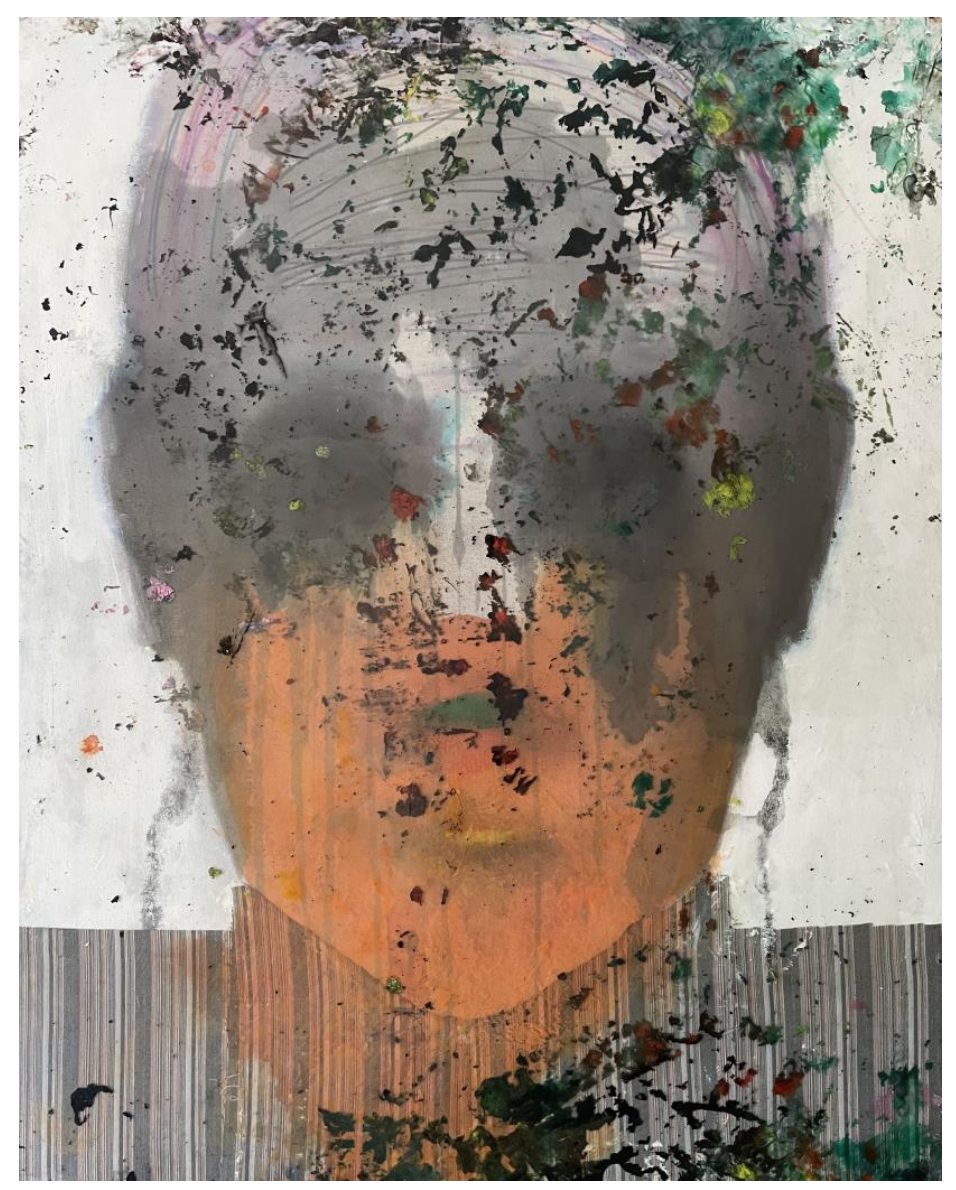
"An abstract frontal portrait shows a human head centered on a pale background." by Gela Mikava
Mikava brings a builder's sense of placement to the portrait, along with a restless feeling for colour and touch. The work rewards slow looking, and leaves the sense of an artist turning the face into a layered surface full of life.


