
Inside Seye Sanyaolu's Right Reaction
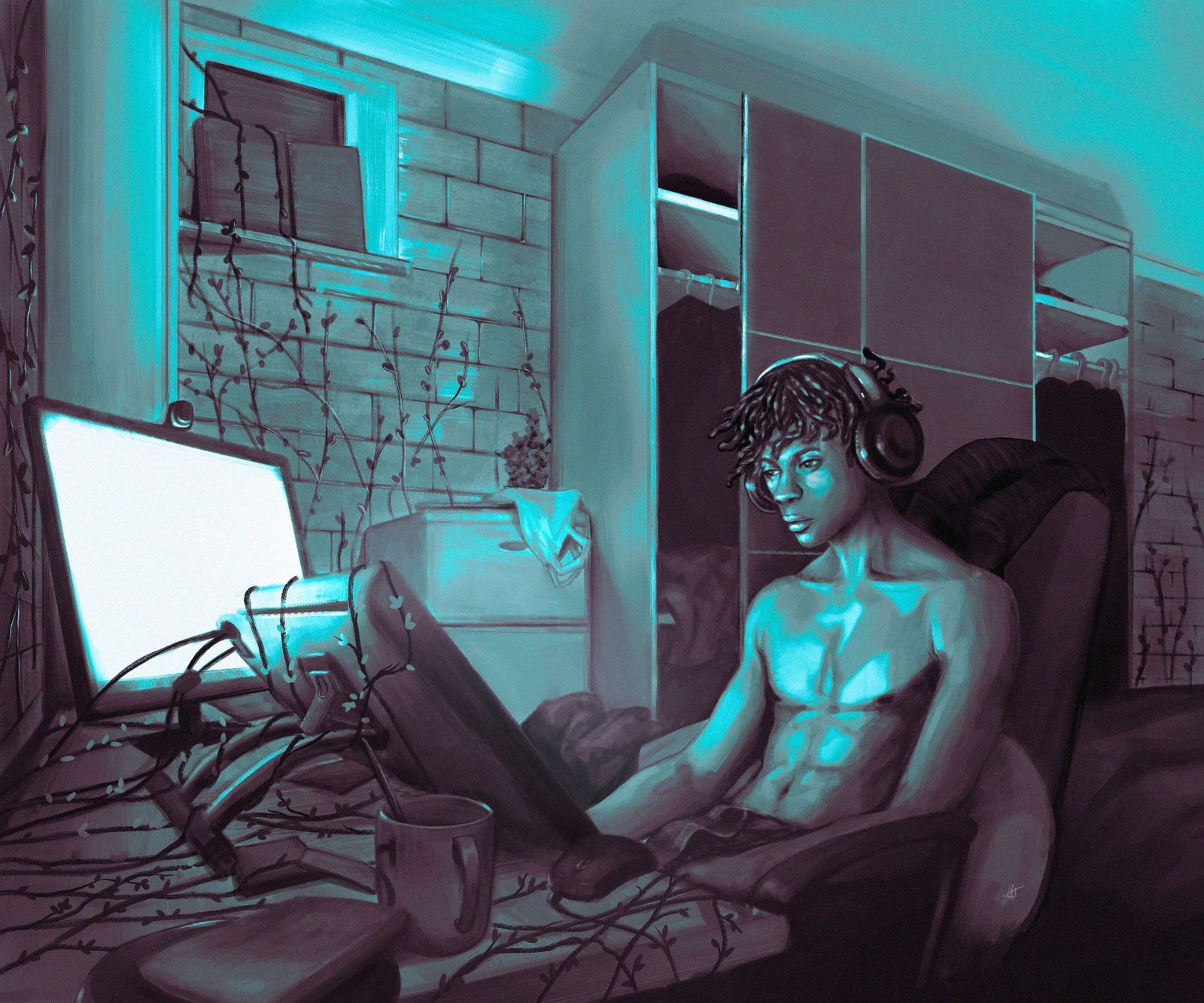
"Computers" by Seye Sanyaolu
Seye Sanyaolu's The Right Reaction first appears to deal in withdrawal: rooms closed around bodies, faces held in the hands, figures caught between screens, furniture and night. Its subject is depression, but the pressure in these images comes from a harder place than sadness alone.
Sanyaolu is an illustrator based in Lagos, Nigeria. The Right Reaction gathers digital illustrations drawn from moments in his life over the past three to four years, made in response to "the state of the world, my country, and myself." His account turns the collection towards self-judgement: "Going through upsetting times is one thing but judging yourself on how well you react to it is another." The images study that second pressure, when distress becomes something to assess.
Rooms as Pressure
Sanyaolu's rooms behave like weather systems. In the computer-desk work, a bright monitor throws cool light across a shirtless seated body, the desk and the wall. A small webcam sits on the screen; large headphones cover the ears. The figure faces a possible channel of contact, while the room keeps its hold.
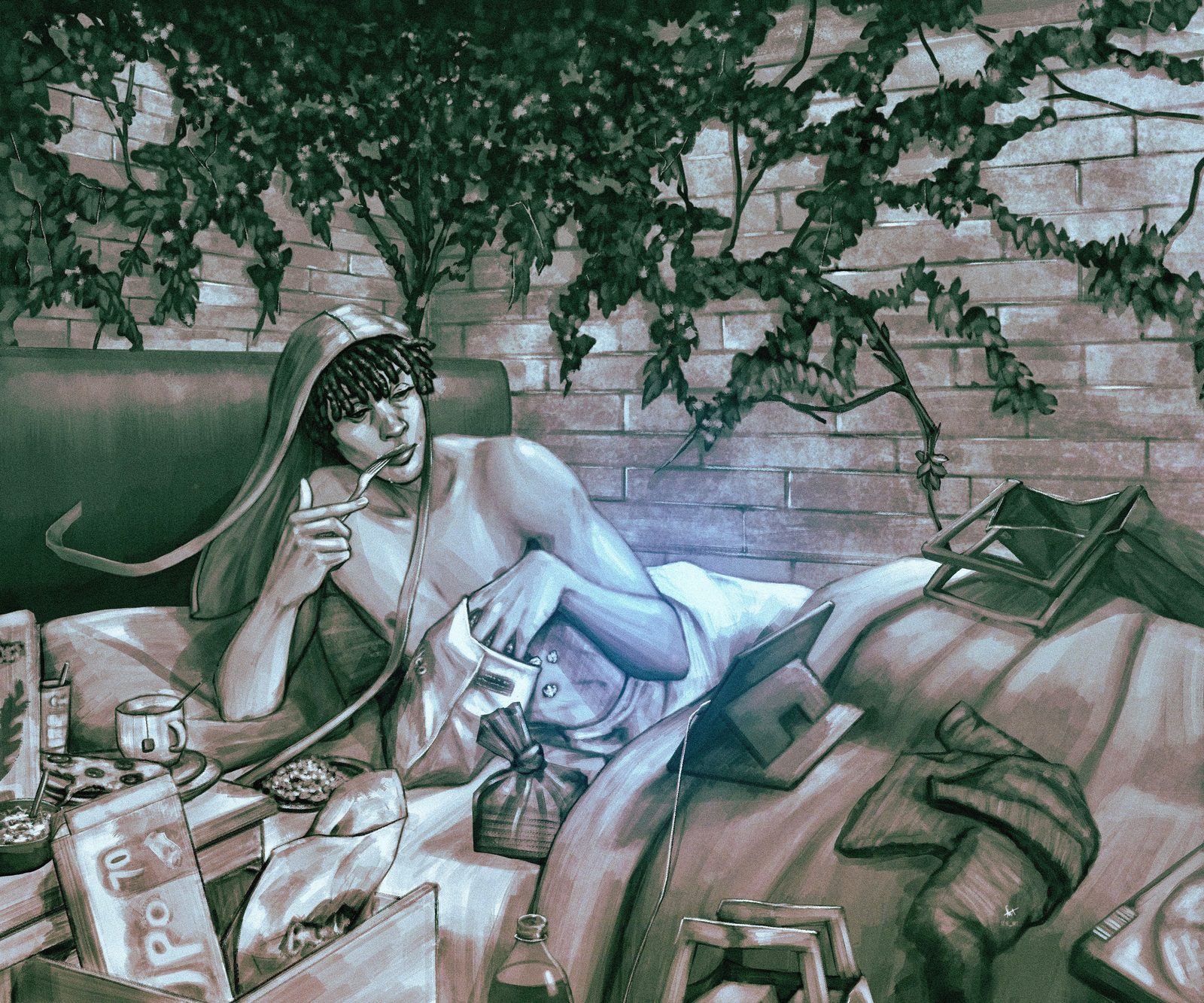
"Binge" by Seye Sanyaolu
Cables cross the desk. Plant stems spread over the wall and furniture. Sanyaolu draws technical, domestic and organic lines with a similar creeping pressure, so the setting becomes part of the figure's condition. The point is not that each object has a fixed meaning. The force is formal. Screen, cable, stem, wall and body are pulled into one field, and any relation to the outside world has to pass through equipment, light and enclosure.
The reclining work takes that pressure into a more collapsed register. A body lies diagonally among food containers, cups, devices and hanging leaves. A hand disappears into a packet. Care, appetite, distraction and fatigue are folded onto the same surface. Consumption continues with a mechanical quality, as if habit has outlasted agency.
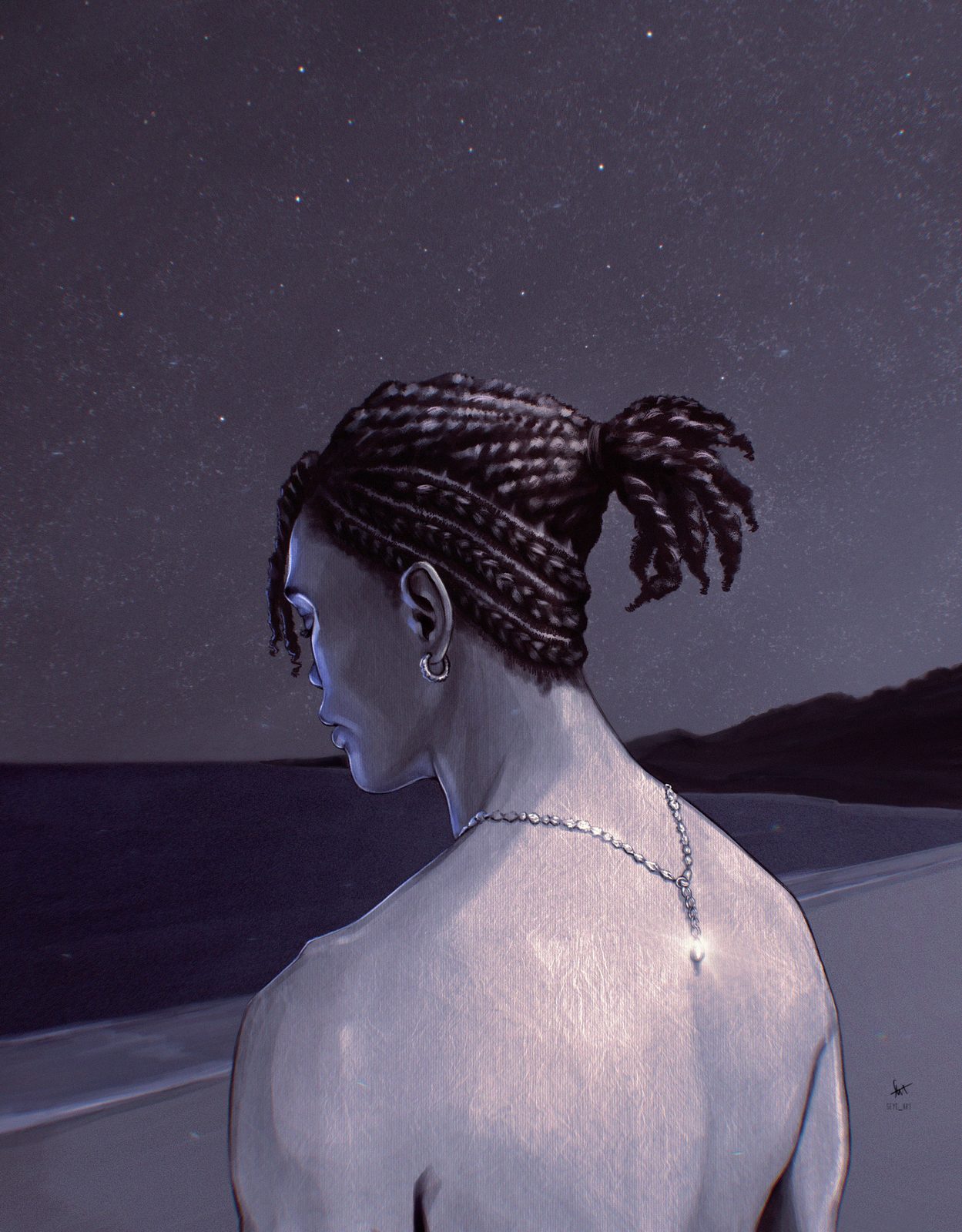
"Metallic" by Seye Sanyaolu
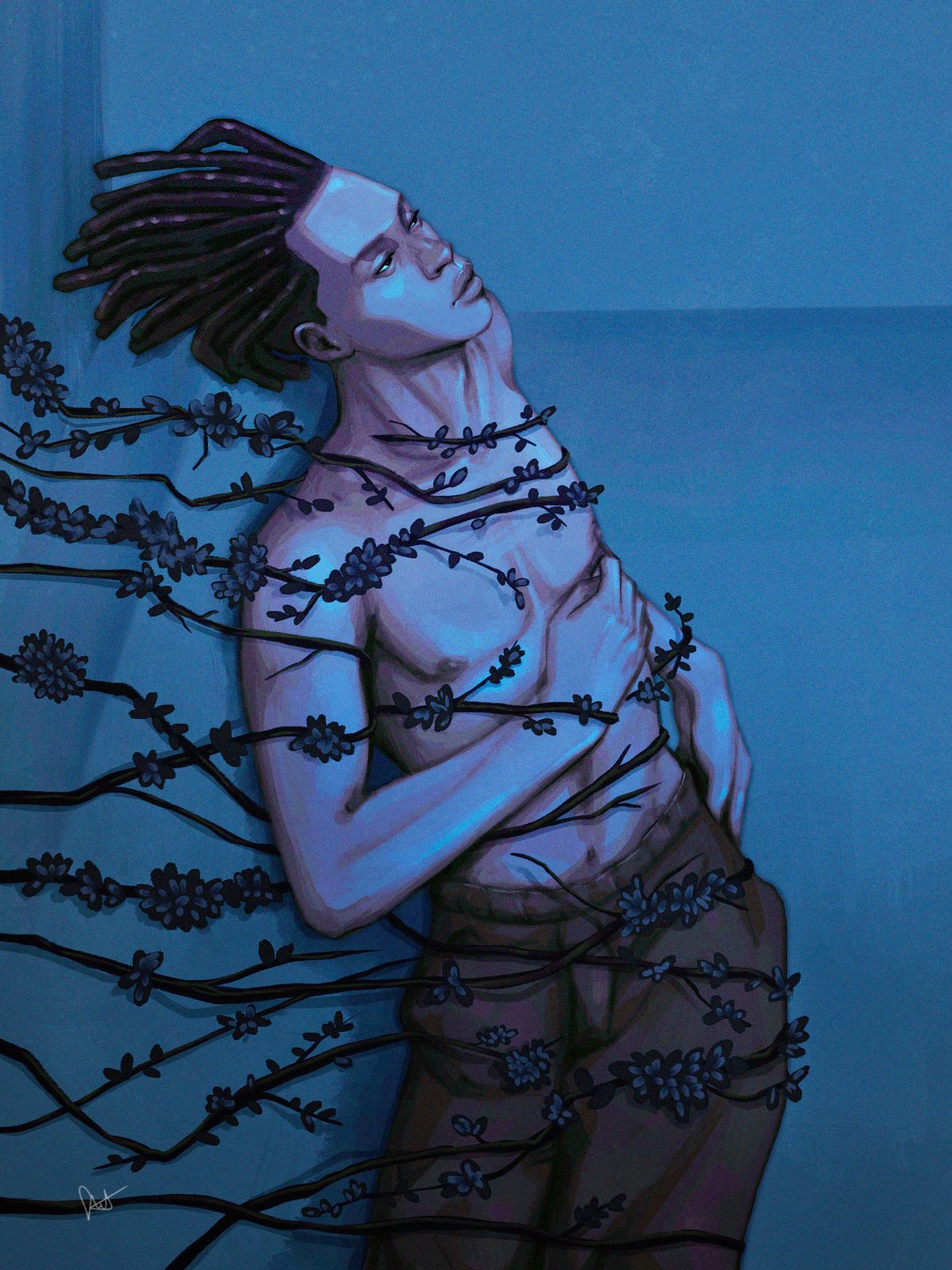
In another work, a shirtless figure leans into a corner while dark flowering stems cross the neck, torso and arms. The corner line matters. It gives the body little room to turn, so passivity becomes physical, made by angle, contour and contact. Sanyaolu makes interior life spatial without turning the room into a neat emblem. Everything presses back.
Bodies Before Response
The figures in The Right Reaction rarely act outwardly. They sit, recline, lean back, press their hands to their faces or turn away. Their stillness is central to the collection's meaning. Sanyaolu draws reaction before it becomes legible to other people, before it can be named as recovery, collapse, resilience or failure.
The close portrait, with both palms pressed against the cheeks, makes that interval feel structural. Pixel blocks and colour offsets interrupt the head and background. The effect reads as pressure on perception rather than decoration. Digital distortion is not used to cleanly illustrate overload; it unsettles the image at the point where a face might usually offer clarity.
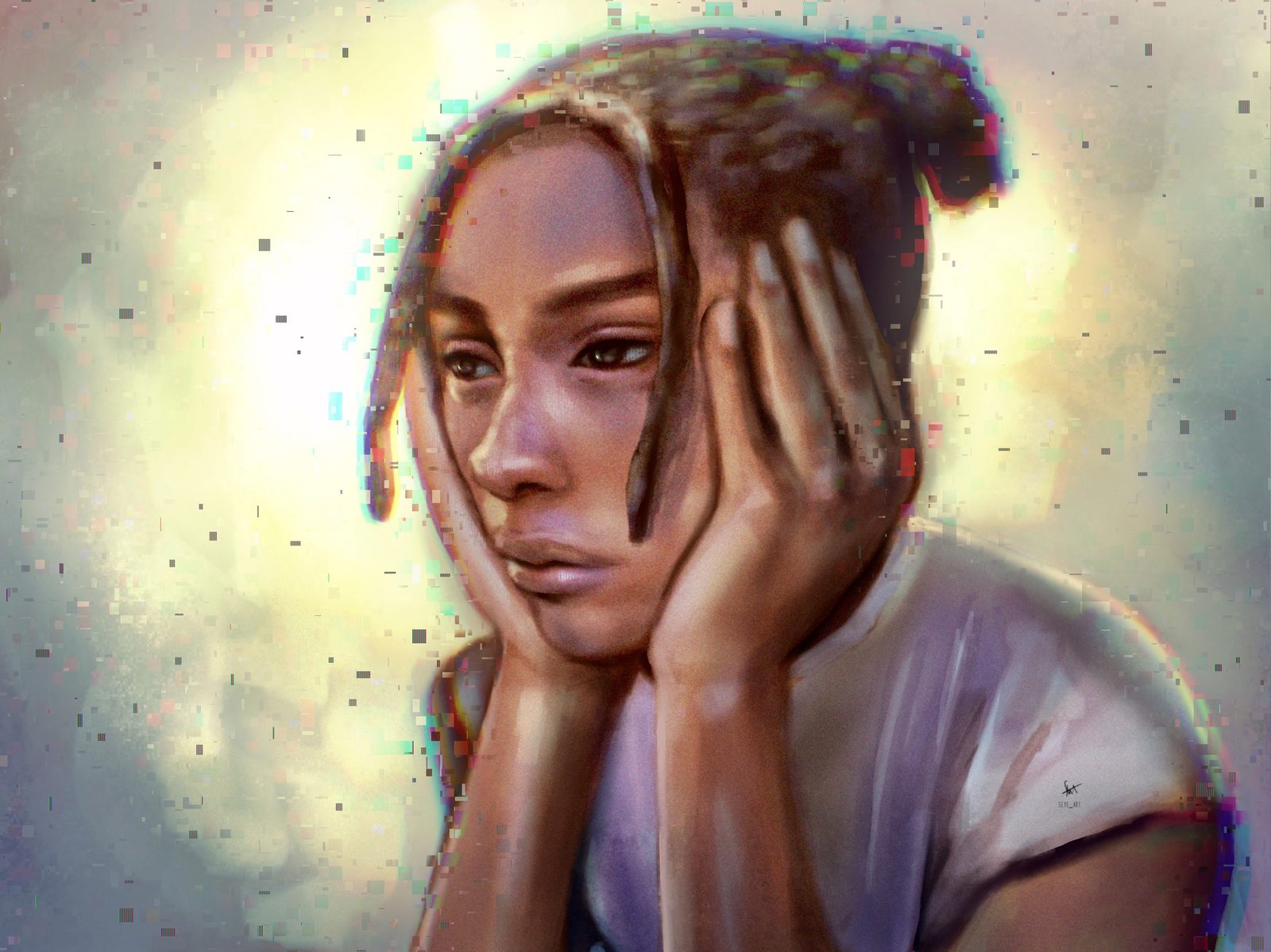
"Overload" by Seye Sanyaolu
There is a risk here. Cluttered rooms, glitch effects, withdrawn poses and vines crossing skin can become familiar signs of distress. Sanyaolu's restraint keeps them from flattening into shorthand. His figures are not pushed into theatrical despair. Their gestures stay small: facing a screen, eating, sitting, leaning, holding the face.
Another sentence from the artist gives those gestures their sharper frame: "It's important not to dwell but also just as important to realize that feeling awful about awful times is the right reaction." The wording is plain, almost corrective. It does not turn the work into advice. It clarifies the discomfort of the images. These figures are feeling bad while also caught in the act of measuring that feeling.
Digital Grain
Sanyaolu works primarily through digital media. For this collection, he says, "I used limited colors and textured brushes to express the cluttered and sometimes empty feeling of depression." Across the works, teal, cyan, grey, dark purple, subdued green, blue, violet, black and muted pink narrow the emotional register. The palette reduces the world rather than heightening it. Clutter and blankness begin to feel related.
"Vines" by Seye Sanyaolu
Texture carries much of that relation. Skin, walls, sky and background surfaces are rubbed with visible grain. The brushwork keeps the images from becoming clean icons of depression. Even the emptier spaces feel handled, softened or abraded, as if the surface has absorbed pressure from the body it surrounds.
The shoreline work complicates the collection's interiors. Space opens out under a speckled night sky, with cool light catching the shoulder, neck, jewellery and braided hair of a shirtless figure turned away from us. The room has gone, but the withholding remains. Openness does not automatically become relief.
That withheld quality gives the collection much of its strength. The works feel intimate because Sanyaolu says they come from moments in his life, yet they are not explained through anecdote. The figures are close, sometimes uncomfortably so, but their stories are not handed over. The gap matters. It allows the digital surface, restricted colour and compressed space to carry the emotional thinking.
What Sanyaolu achieves in The Right Reaction is a record of emotional pressure without spectacle. He uses digital illustration to hold two states together: the overloaded room and the emptied self, the mess of objects and the quiet discipline of staying with a feeling. The limited palette, worked texture and bodily stillness do the serious work. They let depression appear through ordinary acts without forcing it into recovery or defeat.
Sanyaolu's achievement is to make ordinary acts of withdrawal carry emotional weight without turning them into spectacle. Through digital texture, restricted colour and compressed interiors, he shows how distress can inhabit a room, a gesture or the light of a screen. The images offer neither a diagnosis nor a route to recovery. They hold the viewer with something less resolved: the effort of living through a feeling while resisting the urge to judge it.


